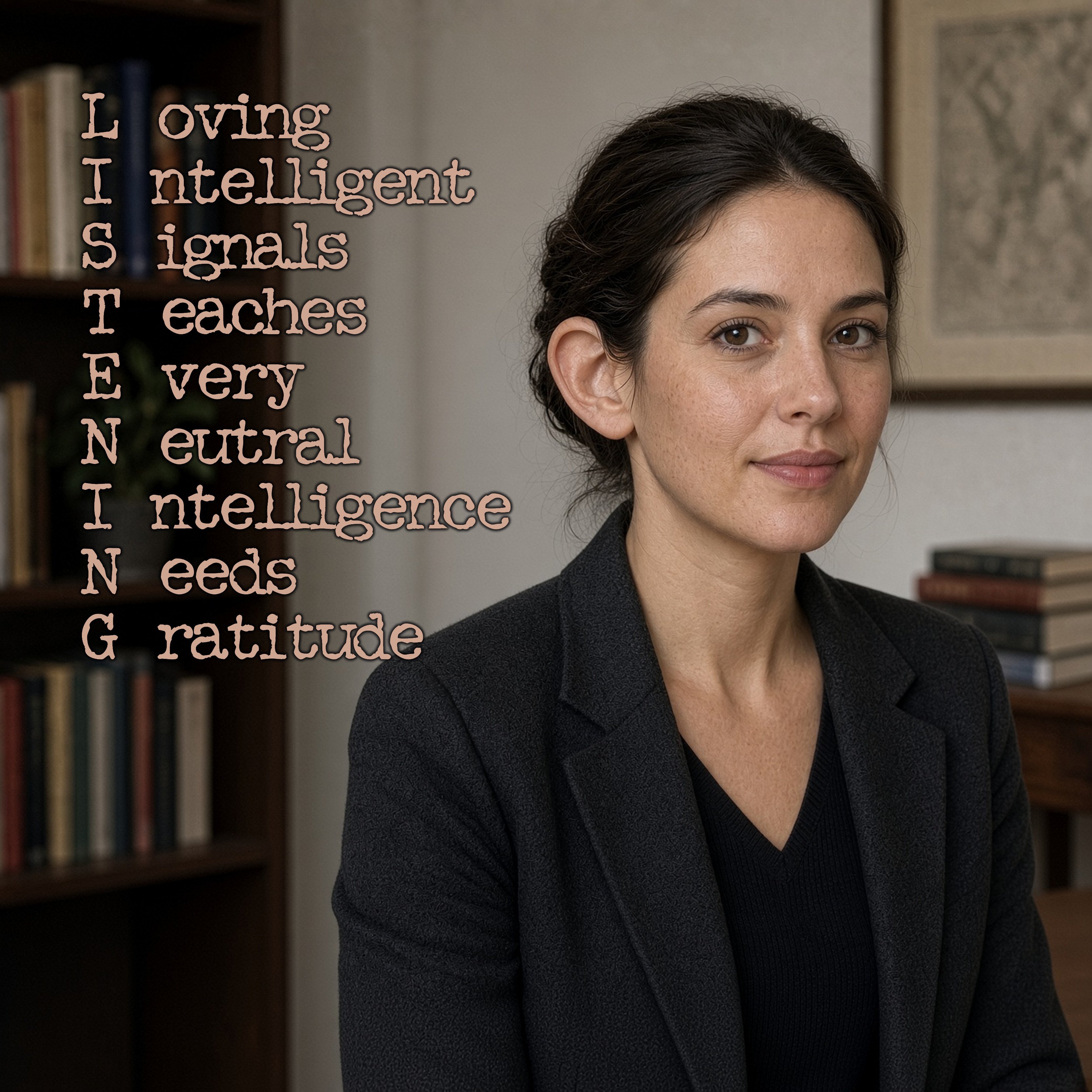
There are moments in life when silence speaks louder than words. It is in these quiet spaces that I often find the most profound truths. Sometimes all you need to do is listen, and in order to listen properly, take a break from speaking. This is not just about quieting the mind, but about opening the heart to the subtle, often overlooked signals that life offers. In my own journey, I have learned that listening is a form of love—love for the self, for others, and for the world around us.
Listening begins with intention. It is not a passive act but a conscious choice to be present. When I choose to listen, I am not merely hearing the words spoken, but I am also attuning myself to the emotions and energies that accompany them. This kind of listening requires a deep sense of intelligence, not just in the intellectual sense, but in the ability to understand and connect with the unspoken. It is this intelligence that allows me to see beyond surface-level interactions and recognize the deeper meanings behind people's words and actions.
Signals are the language of the unseen. They are the cues, the gestures, the pauses, and the silences that carry meaning beyond what is spoken. In my daily life, I have come to appreciate how these signals shape our understanding of each other and of ourselves. Sometimes, the most important messages are not conveyed through words but through the subtle shifts in tone, the way a person holds their gaze, or the hesitation before a response. These signals are not always easy to interpret, but they are essential in forming authentic connections and fostering empathy.
Teaching is a process of learning, and listening is one of the most valuable lessons I have ever embraced. It has taught me that true understanding requires patience, openness, and a willingness to let go of assumptions. In the act of listening, I have discovered that I am not just receiving information, but also reflecting on my own values, beliefs, and experiences. This process of reflection has been transformative, allowing me to grow in ways I never anticipated. It has also helped me cultivate a greater sense of humility, recognizing that there is always more to learn and understand.
Every moment of listening is an opportunity for growth. Whether it is in my relationships, my work, or my personal reflections, the practice of listening has brought clarity and depth to my life. It has helped me navigate difficult conversations with more grace and has allowed me to respond with greater empathy and compassion. In a world that often prioritizes speaking over listening, I have found that the act of truly hearing another person can be a powerful form of connection and healing. It is a reminder that we are all part of a larger, interconnected web of human experience.
Neutral intelligence is not about detachment but about balance. It is the ability to remain grounded in the face of uncertainty, to hold space for conflicting perspectives, and to approach situations with an open mind and heart. In my own life, I have found that this kind of intelligence is especially important when listening. It allows me to set aside my own judgments and assumptions, and instead, to engage with the speaker in a way that is respectful and meaningful. This kind of neutrality is not passive; it is an active choice to be present and to listen without bias or expectation.
Finally, gratitude is the foundation of all true listening. It is the recognition that we are all part of a larger, interconnected existence, and that every interaction, every signal, and every moment of silence holds significance. Gratitude for the opportunity to listen, to be heard, and to connect with others is what sustains the practice of listening in my life. It is a reminder that listening is not just an act of receiving, but also an act of giving—giving our attention, our presence, and our openness to the world around us. In this way, listening becomes a form of love, a way of honoring the intelligence that resides in every being, and a step toward greater understanding and connection.
BACK  HOME