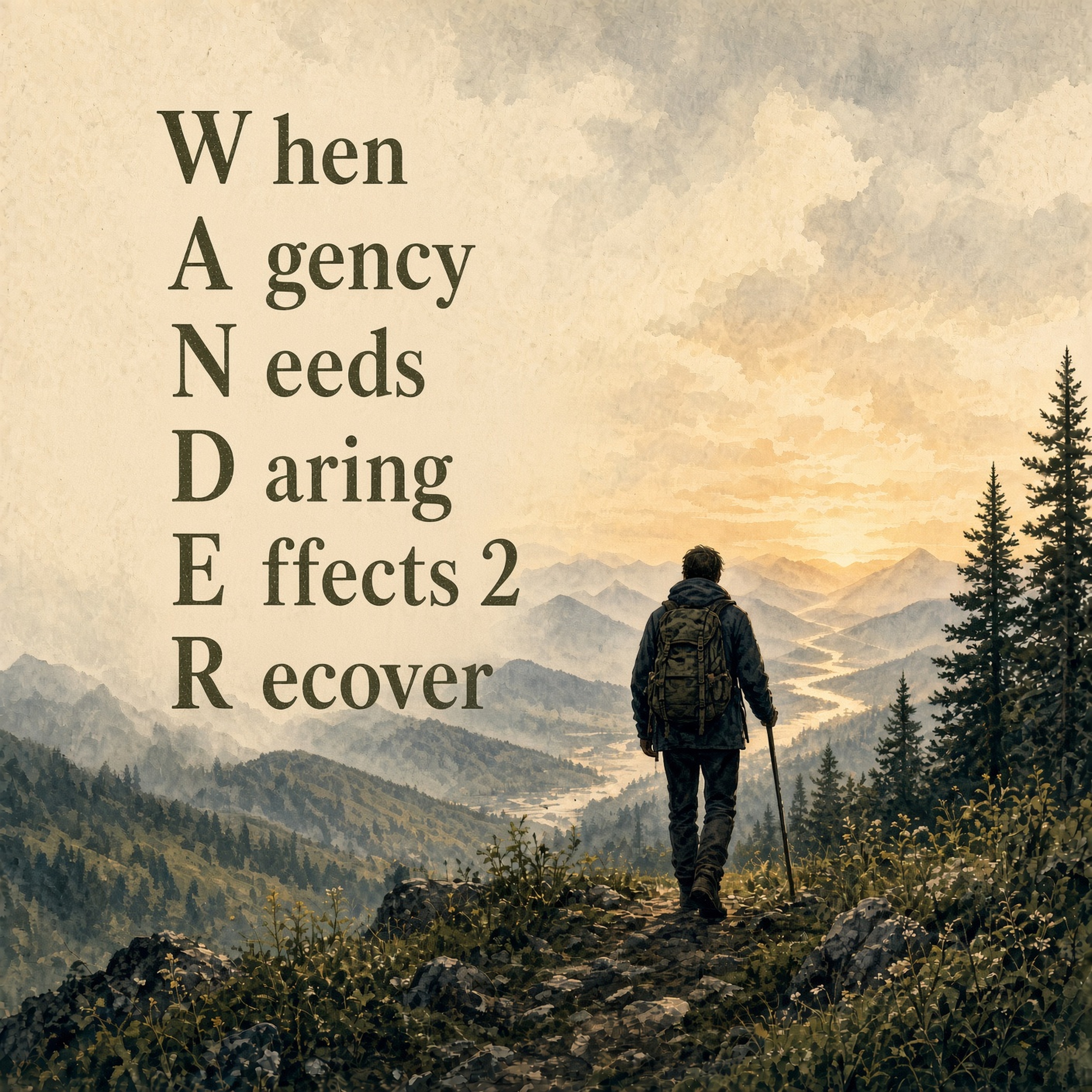
Not all those who wander are lost, a thought that settles into my mind whenever I set out without a map or a plan, letting the path unfold as it will. In these quiet travels I find myself wondering even more than I move, turning over the layers of the world with a gentle curiosity that never demands answers right away. The politics that shape nations drift into my reflections like distant weather, sometimes clear and sometimes clouded, yet always reminding me how small my own choices can feel against larger currents. Technology rises steadily around us, offering tools that connect and also distance, and I notice how each new device changes the rhythm of ordinary days without fanfare. Our shift toward external intelligence draws me into deeper consideration, as systems outside ourselves begin to hold knowledge once kept within, prompting me to ask what remains truly our own. Through it all the need for personal agency surfaces quietly, suggesting that daring steps may be required if any recovery is to take place in this landscape of constant change.
When the headlines arrive each morning they carry stories of decisions made far away, policies that ripple into neighborhoods I will never visit yet still affect the air I breathe and the food I choose. I sit with these reports calmly, wondering how power moves through committees and campaigns, how voices rise or fade depending on timing and alliances, and how my own vote or silence fits into the pattern. There is no anger in this wondering, only a steady awareness that agency can slip when attention is pulled elsewhere, leaving individuals to navigate consequences they did not shape. Still the act of noticing keeps a small flame of independence alive, a reminder that observation itself can be a form of presence even when influence feels limited.
The rise of technology enters my days through screens that brighten at a touch and algorithms that suggest what I might enjoy next, each convenience arriving with an understated grace. I watch how these tools organize time, shorten distances, and sometimes crowd out the slower pace of thought that once filled idle hours. Conversations once held across tables now travel through invisible networks, and I notice both the reach and the thinness that can accompany such speed. In this environment personal agency appears as a choice to pause before accepting every prompt, to decide when connection serves and when solitude restores balance.
Our movement into a world of external intelligence unfolds without ceremony, as models learn patterns from vast stores of human expression and return suggestions that feel almost intuitive. I reflect on what it means to share thinking with systems that never tire, that remember more than any single mind can hold, and that offer assistance even when the request remains unspoken. This shift invites questions about memory and judgment, about the moments when guidance from outside might replace the quiet work of forming an opinion within. Yet the wondering stays personal, focused on how I might remain the author of my own responses amid growing assistance.
Agency begins to feel like a garden that needs tending when external forces multiply, each new layer of information or automation adding richness while also threatening to overshadow what grows naturally. I have learned to recognize the signs of diminished direction, the times when choices seem already made by convenience or expectation, and I turn toward small acts of refusal that restore a sense of authorship. Recovery does not arrive through grand reversal but through repeated, quiet decisions to reclaim attention and intention wherever possible.
Daring effects emerge when ordinary wandering meets the courage to question what feels inevitable, whether in political discourse, technological adoption, or the growing presence of intelligent systems. These effects need not be dramatic; they can appear as a deliberate slowing of pace, a refusal to outsource every reflection, or a willingness to sit with uncertainty rather than accept the first offered solution. In such moments the recovery of agency becomes tangible, a return to the center of one’s own life even as the surrounding world continues its swift evolution.
Through continued wandering and the wondering that accompanies it, I discover that recovery is never finished but always available in the next attentive step. The politics, the technology, and the external intelligence remain part of the landscape, yet they do not define the path entirely. Instead they provide the terrain on which personal agency can practice its quiet daring, finding effects that restore balance without demanding the world pause. In this way the journey stays open, marked by calm presence rather than arrival, and the simple truth that not all who wander are lost continues to hold its gentle reassurance.
BACK  HOME